

Is Glaucoma Hereditary?
Key Takeaways
- Family history can raise your chances of glaucoma, though it does not mean you’ll definitely get it.
- Either parent can pass down risk, and siblings share a strong connection too.
- Open-angle and normal-tension types often run in families and can develop slowly.
- People over 60 and those with diabetes or high blood pressure face added risk.
- Regular eye exams can catch changes early when treatment helps most.
Maybe your mom mentioned drops for her eyes, or your grandfather lost some of his side vision as he aged. That kind of story matters more than you might think. Our team at Total Focus Optometry often sees how glaucoma quietly runs through families, and knowing your family history can shape how you care for your own eyes.
Yes, glaucoma can be hereditary, and having a close relative with the condition raises your risk, though it does not guarantee you’ll develop it. The rest comes down to regular checks and a few habits you can control.
How Glaucoma Passes Through Families
Your genes help shape how well fluid drains from your eyes and how sturdy your optic nerve stays over time. When those instructions carry a weakness, pressure can build and slowly harm the nerve that sends pictures to your brain.
If a parent, sibling, or child has glaucoma, your own chances go up. Think of it as a nudge to pay closer attention, not a sentence. Risk means likelihood, so many people with a family history can maintain clear vision for life.
Maternal or Paternal Risk
Either parent can pass down this tendency, so it helps to ask both sides of the family. Siblings share a strong link, too. If a brother or sister has glaucoma, that’s a good reason to book your own exam.
Types of Glaucoma Linked to Family History
Not every form of glaucoma looks the same, and a few show up more often when relatives are affected. Knowing which type runs in your family gives the eye doctor a clearer starting point.
Open-Angle and Normal-Tension Types
Open-angle glaucoma is the most common form. It creeps in with gradual vision changes you might not notice for years. Normal-tension glaucoma is a bit different because the optic nerve takes damage even when eye pressure reads within a typical range.
Congenital and Other Inherited Forms
Congenital glaucoma shows up at birth and remains rare. Other inherited forms, such as angle-closure and pigmentary glaucoma, can also appear in some families. Each type calls for a slightly different approach, which is why sharing your history helps.
Who Faces Higher Risk and Why?
Some people carry more risk than others, and family ties sit near the top of the list. Parents, siblings, and adult children of someone with glaucoma should keep it on their radar.
Age plays a part too. Once you pass 60, your chances climb. Health conditions like diabetes and high blood pressure can add to the picture, since they affect blood flow to the delicate nerve at the back of your eye.
Warning Signs to Watch For
Glaucoma rarely announces itself, which is what makes it tricky. The changes can come slowly and quietly, sometimes over many years. Watch for these shifts:
- Slow, quiet loss of vision that you barely notice day to day
- Blurred edges or gaps in your side vision
Eye Exams and Screening for Family Members
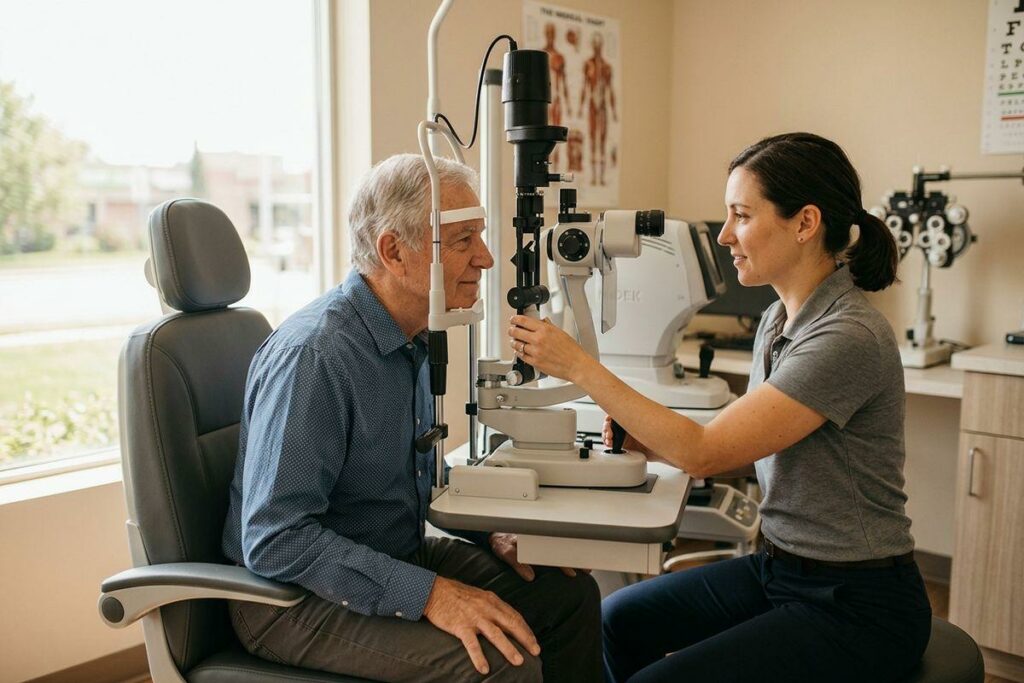
The clearest way to stay ahead of glaucoma is a comprehensive eye exam. Start by telling the eye doctor about any relatives with the condition. That single detail can shape how often you come in and what tests make sense.
Given your family history, you may benefit from earlier checks than the average person. During an exam, our team can look at your optic nerve, measure the pressure inside your eyes, and map your field of vision to spot quiet changes.
When to Begin Checks in South Edmonton
A baseline exam gives your eye doctor in South Edmonton a picture to compare against year after year. Small shifts can stand out when there’s something to measure them against. Timing depends on your risk, not your age alone, so ask what schedule fits your history.
Ways to Protect Your Vision with Family History
You have real influence here, even with genes in the mix. Keep up with regular comprehensive eye exams so any change can be caught early. Managing your blood pressure and staying active with daily habits support the blood flow your eyes rely on.
Talk with your relatives, too. A quick chat about who has been screened can prompt someone to book a visit they’ve been putting off.
Should You Worry About Your Children?
Childhood risk stays generally low, so there’s no need for alarm. Routine checks offer plenty of reassurance and help the whole family build a habit of caring for their eyes.
Come See Us
For over 70 years, our team at Total Focus Optometry has built lasting relationships with families across the community. Book a comprehensive eye exam today and give your vision the steady attention it deserves.