
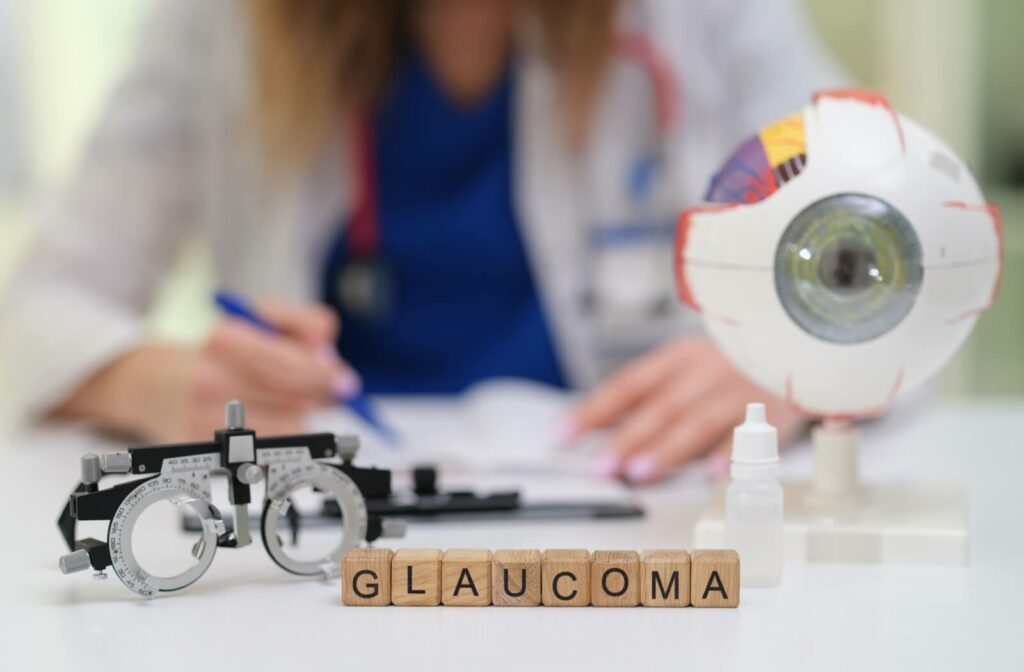
You may be surprised to learn that glaucoma is often called the “silent thief of sight.” It earns this name because it can sneak up on you, developing slowly over the years without any pain or clear warning signs.
For the most common type of glaucoma, there is often no first sign at all, as it usually develops slowly over time without any pain or obvious symptoms. This is why routine eye exams are so important—they give an eye doctor a chance to spot the condition before you notice any changes to your vision.
The First Sign of Glaucoma
With primary open-angle glaucoma, which is the most common form, the first change is usually a slow loss of your peripheral (side) vision. The change happens so gradually that your brain often fills in the gaps, so you don’t realize you’re experiencing signs of weakening eyesight.
Your vision can seem perfectly fine until the condition has progressed. The early signs you may or may not notice can include:
- Patchy blind spots in your side or central vision
- Tunnel vision in the more advanced stages
When Glaucoma Symptoms Are Sudden and Obvious
While most types of glaucoma develop quietly, a less common form called acute angle-closure glaucoma can appear suddenly with very clear symptoms. These signs show up quickly and are your body’s way of telling you to get help right away.
Red Flags for Glaucoma
If you experience any of these signs, it’s a good idea to seek attention. Keep an eye out for:
- Severe eye pain or a very bad headache
- Nausea or vomiting that happens with eye pain
- Sudden blurred vision
- Seeing halos or rainbow-coloured rings around lights
- Redness in the eye
A Quick Look at Different Types of Glaucoma
Glaucoma isn’t a single condition but a group of eye diseases that damage the optic nerve. The type you have affects the symptoms you might experience and how it’s managed.
Open-Angle Glaucoma
This is the most widespread type of glaucoma. The drainage canals in your eye become less efficient over time, which causes eye pressure to build up slowly. It is typically unnoticeable and doesn’t cause any vision changes in its early stages.
Angle-Closure Glaucoma
This type occurs when the drainage angle in your eye gets blocked. This blockage can cause a quick and sharp increase in eye pressure. It can happen as a sudden event with obvious symptoms or as a more gradual process.
Who Has a Higher Risk for Glaucoma?
Certain factors can make you more likely to develop glaucoma. Knowing if you fall into any of these groups can help you take a proactive approach to your eye health.
- Age: Your risk increases as you get older, especially after age 55.
- Family history: Glaucoma can run in families, so if a close relative has it, your risk is higher.
- Heritage: Your background can play a role. People of Black, Asian, or Hispanic descent have an increased risk.
- Medical conditions: Other health issues like diabetes, high blood pressure, and heart disease can be contributing factors.
- Eye injuries: A previous serious injury to your eye can also increase your risk.
How You Can Protect Your Vision
You can’t completely prevent glaucoma, but catching it early can help protect your sight. Simple, proactive steps can make a big difference in managing your eye health for years to come.
The Role of Regular Eye Exams
Comprehensive eye exams can help detect glaucoma before you notice any symptoms. During a visit, an eye doctor can measure your eye pressure, check for optic nerve damage, and look for other signs of the condition.
Know Your Family’s Eye Health History
Talk to your family members about their eye health. If glaucoma runs in your family, you may need more frequent screenings to monitor your eyes and catch any changes early on.
Wear Eye Protection
Protecting your eyes from injuries can help reduce your risk of developing glaucoma later. This means wearing protective eyewear when you play sports or use power tools.
Take Care of Your Eyes
Your vision is an important part of your overall health. Our team at Total Focus Optometry helps you care for your eyes with personalized attention, making your vision and health a priority. Book your next comprehensive eye exam today.